
FORSCHUNGSPROJEKT:
Systematisierung von Erfahrungen des agroökologischen Lernens und Lehrens in ländlichen Gemeinden in Kuba und Mexiko.
En castellano: Sistematización de Experiencias en Aprendizajes-Enseñanzas Agroecológicas en Cuba y Mexico.
In English: Systematization of agroecological learning-teaching experiences in rural communities in Cuba and Mexico
Das Paulo Freire Zentrum führt in Kooperation mit der Asociación Cubana de Técnicos Agrícolas y Forestales (ACTAF, Kuba) und der Maestría en Ciencias en Desarrollo Rural Regional de la Universidad Autónoma de Chapingo, Sede Chiapas (Mexiko) ein Forschungsprojekt zur „Systematisierung von Erfahrungen des agroökologischen Lernens und Lehrens in ländlichen Gemeinden in Kuba und Mexiko (SALE)“ durch.
PROJEKTBESCHREIBUNG:
Einbettung des Forschungsprojekts:
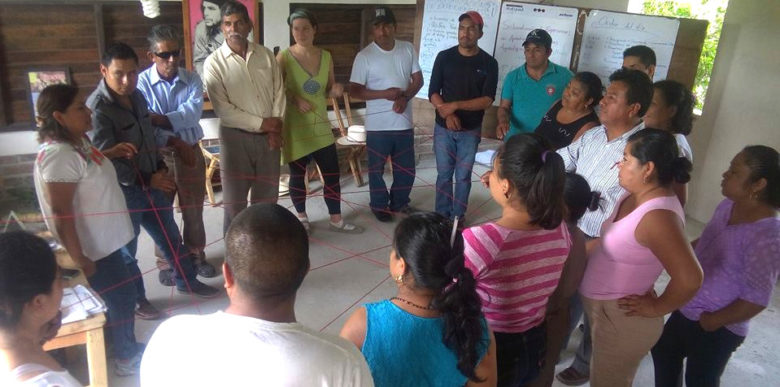
Das Forschungsprojekt widmet sich einer vergleichenden Studie von agroökologischen Lern- und Lehrprozessen von KleinbäuerInnen in Chiapas, Mexiko und Camagüey, Kuba. Die lokalen Lernaktivitäten in Camagüey finden in Kooperativen von KleinbäuerInnen statt und sind Teil der nationalen Agrarökologiebewegung Kubas. In Chiapas wird die partizipative Forschung mit einer „Escuela Campesina“ der BäuerInnenorganisation OCEZ-CNPA in La Trinitaria im Süden des Landes durchgeführt.
Methodik:
Diese beiden Erfahrungen des agroökologischen Lehrens und Lernens werden mittels „Partizipativer Aktionsforschung„, den Methoden der „Sistematización de experiencias” und „Participatory Rural Appraisal“ auf partizipative und transdisziplinäre Weise reflektiert, dokumentiert und analysiert. Dabei stehen der Austausch von verschiedenen Wissensformen und die kollektive Rekonstruktion der agroökologischen Bildungserfahrungen im Vordergrund. Das wesentliche Forschungsinteresse widmet sich den praktizierten Formen agroökologischen Lernens und Lehrens, sowie im weiteren Sinne der Frage, inwiefern diese Praktiken zu Prozessen der Ermächtigung, der lokalen Autonomie und nachhaltigen Entwicklung beitragen.
Forschungsziel:
Von vorrangiger Bedeutung ist die emanzipatorische, aktions-orientierte und dialogische Herangehensweise der Forschung. Sie soll in erster Linie den lokalen AkteurInnen (v.a. BäuerInnen und KoordinatorInnen von bäuerlichen Organisationen) dienlich sein. Die systematische Evaluierung ihrer Bildungsmethoden ist Voraussetzung für deren Weiterentwicklung und Verbreitung. Die Zusammenarbeit und der Austausch von mexikanischen und kubanischen Erfahrungen haben das Potential, eine nachhaltige Süd-Süd-Kooperation im Bereich des Lernens und Lehrens innerhalb von agroökologischen Bewegungen zu eröffnen.
PROJECTDESCRIPTION IN ENGLISH:
Project context:
The research project’s objective is a comparative study of two different agroecological learning and teaching groups, one located in Chiapas, Mexico and the other in Camagüey, Cuba. In Camagüey, the investigated local experiences of two famers‘ cooperatives are part of the National Agroecological Movement Campesino a Campesino. The learning community to be investigated in Chiapas is a Famers School of the farmers‘ organisation OCEZ-CNPA in La Trinitaria in the south of the country.
Methodology:
The interest as well as the method of research is oriented towards participatory and dialogical ways of communication. A horizontal dialogue between practitioners of agroecological education and scientists of different disciplines constitutes the central task and challenge of the research. Following the principles of „Participatory Action Research“ and the main methods of “Sistematización de experiencias” and „Rapid Appraisal of Agricultural Knowledge Systems“, the forms of exchange and (re)construction of agroecological knowledge are explored in a collective way, serving the local needs and interests.
Research objective:
The main interest of the research focuses on the means and forms of exchange of agroecological practices and knowledge, and on the question, if these learning practices contribute to processes of empowerment, local autonomy and sustainable development. The reflection and systematization of the experiences is the basis for the further development of non-formal education in agroecology. The interaction has the potential to build a sustainable south-south-cooperation in exchanging learning-teaching experiences in agroecological movements.
Finanziert durch:
KEF – Kommission für Entwicklungsforschung bei der OeAD

Weitere Informationen:
Das Projekt-Factsheet auf Spanisch (El „factsheet“ con la descripción del proyecto en castellano): SALE Factsheet.pdf (109.26 KB)
Foto: Katrin Aiterwegmair © Paulo Freire Zentrum