Jeffrey (voller Name der Redaktion bekannt) lebt seit über fünf Jahren in Berlin. Er ist in Nigeria geboren und als junger Mann durch die Sahara und über das Mittelmeer erst nach Italien, später nach Deutschland geflohen. Schätzungsweise leben mehrere hunderttausend Nigerianer*innen wie Jeffrey in Europa – größtenteils in Großbritannien und Italien. Doch die Flucht aus Nigeria ist sehr gefährlich und auch in Europa besteht weiterhin die Gefahr von Ausbeutung und Armut. Dennoch hoffen viele Verwandte der in Europa angekommenen Nigerianer*innen auf finanzielle Unterstützung oder die Rückzahlung von dem für die Flucht geliehenen Geld. Darum ist es für viele Nigerianer*innen sehr wichtig, zu arbeiten und damit Geld nach Nigeria schicken zu können.
Jeffrey und ich haben uns in der Arbeit kennengelernt. Damals erzählte er mir seine Geschichte. Seit wir nicht mehr in derselben Stadt leben, haben wir uns aus den Augen verloren, doch kürzlich wurde ich über Instagram auf seine Videos aufmerksam. In diesen Kurzvideos filmt Jeffrey sich selbst und richtet seine Nachricht im ernsten Ton direkt an die nigerianische Regierung oder demonstriert vor dem nigerianischen Generalkonsulat in Frankfurt am Main. In den Clips geht es fast immer um drei Buchstaben: NIN. Diese Buchstaben stehen für „National Identification Number“.
Um mehr über diese Problematik zu erfahren, treffe ich Jeffrey an einem verschneiten Januartag in einem Café im Süden Berlins. Die „National Identification Number“ (NIN) ist für Nigerianer*innen weltweit ein zentrales Dokument – ohne sie gibt es keinen Pass, kein Bankkonto, keine offizielle Anerkennung. Wenn Nigerianer*innen also einen Vertrag mit einer nigerianischen Firma abschließen möchten, oder offizielle Dokumente beantragen, müssen sie immer die NIN angeben. Ohne die Angabe der Nummer, werden die Anträge nicht bearbeitet. Doch während die Nummer in Nigeria tatsächlich kostenlos ist, wird sie für die Diaspora in Europa zu einem teuren und undurchsichtigen Geschäft. „Auf der offiziellen Website steht ‚kostenlos‘ – aber wir zahlen seit Jahren horrende Summen“, sagt Jeffrey.
Ein teures Monopol: Private Anbieter und geschlossene Türen.
Eigentlich sollte die NIN über ein Online-Portal beantragbar sein – doch für Nigerianer*innen im Ausland ist das nicht möglich. Stattdessen müssen sie sich an private Unternehmen wenden, die vor Botschaften operieren und die Preise selbst festsetzen. Obwohl diese Unternehmen von der nigerianischen Regierung eingesetzt sind, werden sie nicht genügend von den Botschaften kontrolliert. „Als ich meine erste NIN beantragt habe, kostete es mich 70 Euro. Jetzt verlangen sie für meinen Sohn 120 Euro“, berichtet Jeffrey. In anderen Städten und Ländern seien sogar 100 bis 150 Euro fällig. „In Berlin sind es 120 Euro, in Frankreich 150 Euro, in Österreich ähnlich.“ Die nigerianische Regierung gibt an, keine Kontrolle über die Preise zu haben. Jeffrey jedoch sieht darin eine bewusste Ausbeutung der Diaspora: „Sie denken, wir leben in Europa und haben Geld. Also nehmen sie es sich einfach.“ Besonders betroffen sind Familien: „Stellen Sie sich eine Mutter mit fünf Kindern vor. Sie muss 120 Euro pro Kind zahlen – nur für die NIN. Dann kommen noch die Passkosten dazu. Das sind schnell 2.000 Euro oder mehr. Das ist lächerlich!“
„Die Regierung ignoriert uns“: Bürokratie ohne Antworten.
Laut Jeffrey liegt die Verantwortung für das NIN-System bei der nigerianischen Regierung in Abuja, nicht bei den Botschaften. „Der Konsul in Frankfurt hat mir erklärt, dass sie keine Macht über die NIN haben. Die Entscheidungen kommen direkt aus Nigeria.“ Seit Monaten versucht Jeffrey, den Innenminister Olubunmi Tunji-Ojo zu erreichen – ohne Erfolg. „Ich habe ihm geschrieben, Videos auf Instagram, TikTok und Facebook gepostet. Aber es gibt keine Antwort. Das ist jetzt schon drei Monate her.“ Seine Forderungen sind klar: „Sie müssen die privaten Anbieter abschaffen. Die NIN sollte über die Botschaften oder Konsulate beantragbar sein – oder das Portal muss wieder geöffnet werden, damit wir es selbst machen können.“ Und: „Es muss kostenlos sein, wie in Nigeria.“
Proteste und der Ruf nach Solidarität.
Weil die Regierung nicht handelt, plant Jeffrey Proteste in Berlin – und hofft auf Unterstützung aus ganz Europa. „Wir brauchen die Macht der sozialen Medien und der Presse. Wenn die deutsche und österreichische Öffentlichkeit darüber berichtet, erreicht das vielleicht endlich die Verantwortlichen in Nigeria.“ Sein Appell an die nigerianische Community in Österreich: „Ihr habt dieselben Probleme. Es ist Zeit, dass auch ihr euch Gehör verschafft!“ Viele Nigerianer*innen in Österreich berichten von ähnlichen Erfahrungen – doch bisher gibt es kaum öffentlichen Widerstand. Für Menschen, die nicht aus Nigeria kommen und helfen wollen, gibt es die Möglichkeit, Informationen über die Situation zu teilen: Sie können Medien wie lokale Zeitungen oder Fernsehsender auf den Missstand aufmerksam machen oder bei nigerianischen Botschaften und EU-Abgeordneten politischen Druck auszuüben.
„Ich schäme mich für mein Land“.
Die negative Erfahrung der NIN hat Jeffreys Beziehung zu Nigeria verändert. „Manchmal schäme ich mich. Nigeria nennt sich den ‚Giganten Afrikas‘ – aber in solchen Dingen versagen wir.“ Sein Appell an die Regierung ist unmissverständlich: „Hört auf, private Unternehmen mit diesem System zu bereichern. Macht die NIN für alle zugänglich – kostenlos und ohne Bürokratie!“ Denn eines ist klar: Solange die NIN für die Diaspora ein teures Privileg bleibt, fühlen sie sich von ihrer Regierung im Stich gelassen. Jeffrey gibt sich kämpferisch: „Wenn die Regierung nicht handelt, werden wir lauter – bis sich etwas ändert.“ Die Frage ist: Wird die nigerianische Regierung zuhören?
Hier das ganze Interview zum Nachlesen auf Englisch:
Till: First of all, I would ask you to introduce yourself, like who are you, what are you doing, and just describe yourself in a few words, please.
Jeffrey: I’m Jeffrey. I live in Berlin. I work here and I study also here in Berlin.
Till: Thank you. And in this interview we want to talk about the NIN. That’s the topic.
Most of the readers, will not be familiar with the NIN. So can you describe what it is?
Jeffrey: NIN is an identification number given to Nigerians just to identify our identity and also to track our passport and our bank statement.
Till: Thank you. And like, why is the NIN so important and what is it good for and what is it meant for originally?
Jeffrey: NIN stands for National Identification Number. So it has been used to identify you as a citizen along with a passport. Without this, you cannot make your passport. Your passport can never be made.
Till: Thank you. And how did you first learn about the NIN requirement and what was your initial reaction to it? Actually, when I checked the official website, it is supposed to be for free.
Jeffrey: My first application, which I did because the embassy refused to produce the NIN for the citizens of Nigeria. So they made a private entity for this and the number was being placed in front of the embassy, which will help take this number and contact this private entity. So from there, I think my first, I did for myself was 70 €. So now I’m trying to make for my son and they are telling me 120 €. So the price is outrageous.
Till: I see. That must be quite frustrating. Can you describe the process of trying to obtain the NIN from abroad? You already described it a bit. What steps do you have to take and how long does it take and are there any other obstacles to get it compared to a homeland of Nigeria?
Jeffrey: There are a lot of obstacles. You can’t do this yourself. The portal has been closed, which I tried myself to open the portal, which I have to register online myself. But everything has been declined and not open to individuals. So this is the reason I’ll be calling on the government to make this accessible for individuals. Just the way the passport application is being accessible. Or better still, the embassy or the consulate office will be doing this alone, outside the private entity.
Till: So you said already it’s a private entity which is providing the NIN. Can you describe a bit further what kind of people these private companies are, who they are and how are they empowered to do this?
Jeffrey: I think when I first made the protest in Frankfurt Embassy, I had the opportunity to communicate with the consulate general, his excellency, there in Frankfurt Embassy. Which explained and provided a grievance with Nigerians about this NIN issue and also the issue of passport. So he told me that the issue of NIN is not connected to the embassy or to the consulate office. That the power has been coming from the Nigeria office, people from Abuja. So the people operating NIN as a private entity have nothing to do with the consulate office or the embassy. So the only people responsible for this are the people from Nigeria, the people from Africa, which is from Abuja. And I have been trying to reach Mr. Olubunmi Tunji-Ojo, the minister of interior in Nigeria, to address this issue.
Till: And it’s a simple question, but why is the NIN so expensive? Because I checked the website and there it says it’s completely for free. And you said they stage outrageous prices. What’s your explanation for it?
Jeffrey: This is the question I’m asking myself, because on the website it’s stated free of charge you can acquire the NIN. But we have been paying heavily for this. We have been tasked to pay heavily for this. Just take a look. In Berlin we are paying 120 €. In other cities they are paying 100 €. In other countries they are paying 150 €. I think a friend of mine was told to pay 150 € in France. I believe in Austria it’s also the same thing. But in Berlin we are paying 120 €.
Till: Thank you man. And how this whole process of the NIN, you also mentioned the passport situation, affected your daily lives and plans? Does it provide you from travelling, from banking, family matters, work opportunities?
Jeffrey: It affects everything. Because without this NIN we cannot get our passport done. And without our passport we can’t travel. So because of this issue most of us have been delayed of travelling. For example, imagine a woman with five kids after paying 120 € for the NIN. And also she has to pay extra money for the passport production. So she is going to spend less than 2,000 € in producing passport. So there is something so ridiculous for we Nigerians here in Europe.
Till: And why do you think the NIN process is so difficult and expensive, especially for Nigerians abroad? Because as far as I understood Nigerians in Nigeria don’t have this specific problem.
Jeffrey: Is there a deliberate policy or is it just due to inefficiency? This is something I don’t really understand because I believe there is a body responsible for this. Just to exploit we living in Europe. Just to take more money from we people living in Europe. Because they feel we live in Europe and we have more money. That is why they are trying to exploit we people living in Europe.
Till: Very interesting. And how does this situation reflect on Nigeria’s relationship with the diaspora? Do you feel supported or neglected by your home country because of this?
Jeffrey: The Nigerian diaspora, I think we feel neglected here. Because I have been making a lot of videos on the internet. In my Instagram, I think you saw one of my videos. If you are interested, I am also in my TikTok page, in my Facebook. I have been making a lot of videos about this. Trying to call out the appropriate authority to speak up and talk about this issue. I have also been in the profile. I wrote a message to Mr. Olubunmi Tunji-Ojo, the Minister of Interior, to address this issue. But I am still waiting for the reply right now. I think it is about three months right now. I still don’t get any reply from him. But I will keep on writing about this. Calling him to do something about it.
Till: You already described, but can you dig a bit deeper? What do you do to fight this injustice? You also mentioned demonstrations. Can you explain a bit further what are you doing? We are giving them time.
Jeffrey: We are going to do more protests about this if they refuse to speak up. Or they refuse to reduce this price or cancel the money we have been paid. We are going to make a protest. A big protest here in Berlin whereby the NIN should not be produced by a private entity anymore. All we need is the NIN to be produced in the embassy or the consulate office. Or they should open the portal for us to do this at home. Just like we have been doing the passport ourselves.
Till: What do you think Austrian or German speaking media coverage or public awareness could help to change the situation? What could be done to change this?
Jeffrey: I think by sticking up the media in Germany and in Austria can also help in publishing this news. So that the news will get to the appropriate authority in Nigeria. By spreading this, because there is power in social media right now and also to the news media. So by spreading this, the appropriate authority can also be able to fund this. They have to have a condolence.
Till: What do you think Austrians have to know about this issue which they might still not understand?
Jeffrey: I think Nigerians living in Austria also have the same issue. Because I don’t believe Nigerians living in Austria get their NIN for free. They also pay money for this. So it also affects them. So it is time for them also to start speaking up from Austria. Because right now we have been speaking up from Germany. So the Austrian people also have to speak up. For everybody, every Nigerian living in the diaspora that is being asked to pay heavily for NIN, have to speak up.
Till: What would be the most effective way for individuals or organizations, especially in Austria, to support Nigerians affecting the issue? Maybe also non-Nigerians in Austria.
Jeffrey: Yeah, this is a very good question. What they can do is to help us to spread this message in social media and also in news media.
So that if we get to the appropriate authority, I think we believe by the power of the media or the social media, the information will be spread worldwide.
Are there already any petition campaigns or legal actions that people can join or promote? Is there anything planned already? Right now, the first I did was the protest about the passport in Frankfurt. So I think there is a protest coming up also for the NIN here in Berlin. I will also place the notice on my social media platform whereby we inform the people in the diaspora.
Till: If someone in Austria wants to help regarding that issue, what would be the first step to take action?
Jeffrey: If someone in Austria has to help, if he or she is unable to participate in the protest here in Germany, he or she can also join through online. Then also share the videos, share the message. And to take the scope a bit further, has this experience changed your view on Nigeria, your identity or your relationship to your home country? Yeah, it makes me feel ashamed of my country because we call ourselves the giant of Africa. But there are a lot of things going on whereby we are lacking of. So we have to improve our system. Just like this, it was being placed online that it is free, but we are not getting it for free. We are paying heavily for this. So sometimes I feel ashamed. So I don’t know what the other people would think about we in Nigeria sometimes. So I think that’s why I’m calling on the government or the people responsible for this. The Minister of Interior in Nigeria to please act very fast on this issue. It’s not easy anymore on us here in Europe.
Till: Okay, now final question. You already mentioned it a bit, but what would be the message you would like to send to Nigerian officials responsible for the NIN process?
Jeffrey: So my message is simple and clear. They have to stop the legal and the private entity that has been producing this NIN. They have to make it applicable or accessible to individuals. Like on the portal, when we click on it, we can access it or better still, it should make it accessible through embassy or consulate office. Just that.
Till: Thank you very much.
Der Autor ist Mitglied des Redaktionsteams. Aus Gründen der Äquivalenz haben wir im Interview ebenso wie im Falle des Interviewpartners nur den Vornamen angegeben. Reaktionen bitte an redaktion@pfz.at.
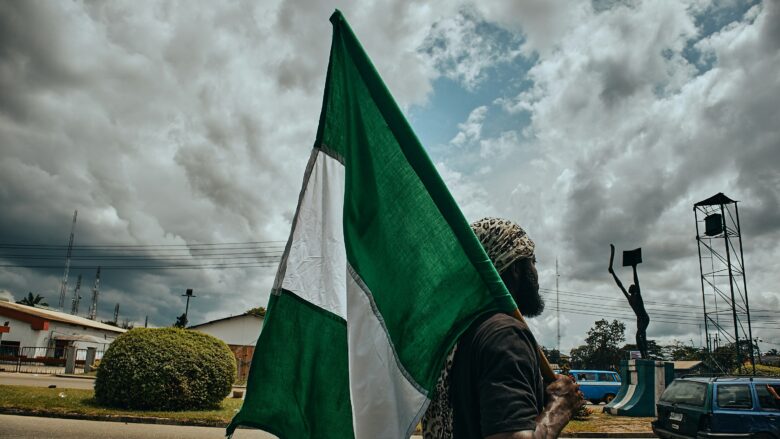
Titelbild © Emmanuel Ikwuegbu auf Unsplash